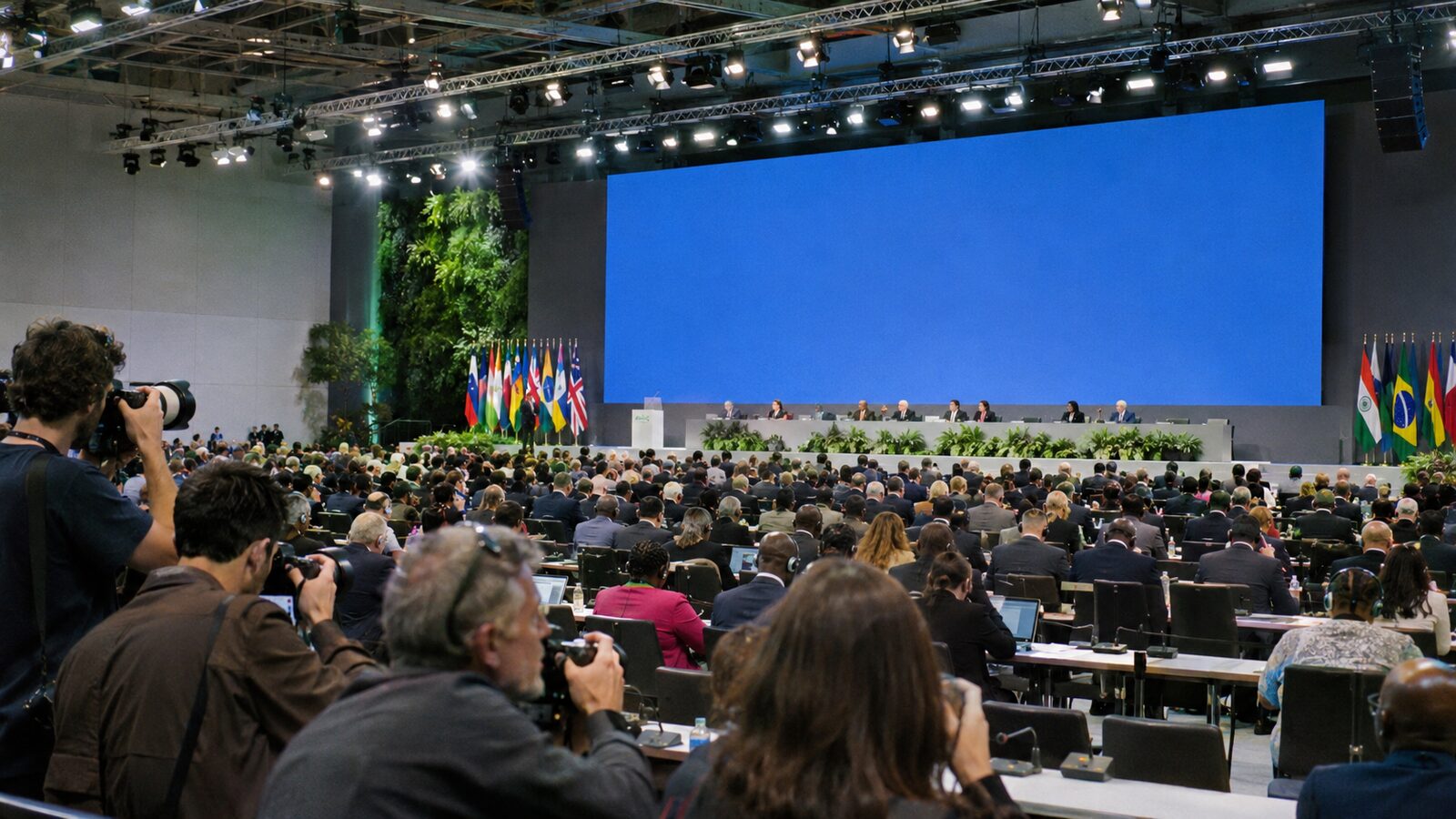
GENEVA — After two weeks of negotiations and a final session that ran 14 hours past schedule, delegates from 196 nations emerged early Tuesday with a landmark agreement to hold another summit.
The Geneva Accord commits signatories to “accelerate, encourage and, where feasible, consider” emissions reductions, and establishes a permanent secretariat tasked with organizing the next meeting.
“This is the most ambitious text this body has ever produced,” said conference president Ines Almeida, reading from a statement that had been negotiated for six days. “It sets a clear direction and a firm date.”
The date is November 2027.
Negotiators described the process as difficult but productive. The final hours hinged on a dispute over whether wealthy nations would “commit” to financing or merely “recognize the importance of” it. The compromise, drafted by a small group of delegates at 3 a.m., uses the word “note.”
Environmental groups offered measured praise. “This agreement proves that the international community can still come together,” said Ravi Menon of the Climate Justice Network. “It also proves that coming together is not the same as doing anything.”
Several delegations objected that the final text omitted the phrase “phase out,” replacing it with “phase in the direction of,” which one exhausted negotiator described as “grammatically load-bearing.”
The next summit will be hosted by a country that has not yet been announced, in a city that has not yet been selected, at a cost that has not yet been estimated.